Himalaya Exploration Tours & Travel is a registered Nepal-based agency specializing in trekking, cultural tours, and custom travel with expert local guidance and reliable service.


Annapurna Base Camp (ABC) is a top trekking destination in Nepal, offering a breathtaking journey deep into the heart of the Annapurna Himalayas. Situated at 4,130 meters, ABC lies within a natural amphitheater surrounded by towering peaks like Annapurna I and Machapuchare (Fishtail). The trek is moderately challenging, passing through lush forests, terraced fields, and traditional villages inhabited by Gurung and Magar communities. Trekkers enjoy stunning mountain panoramas, vibrant local culture, and warm hospitality at teahouses along the trail.
Starting near Pokhara, the trail typically takes 7–12 days, offering a well-marked, accessible route for both beginners and experienced hikers. Annapurna Base Camp is best visited during spring and autumn, when the weather is stable and rhododendrons bloom spectacularly. The trek combines adventure with cultural richness, making it a must-do for travelers seeking an authentic Himalayan experience. Whether you’re an avid trekker or a nature lover, ABC delivers unforgettable views, serene landscapes, and a deep connection to Nepal’s mountain heritage.
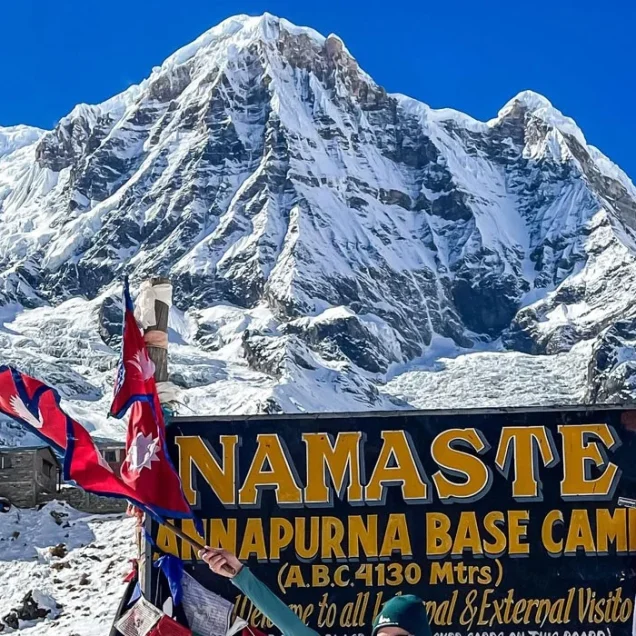
Annapurna Base Camp lies in the heart of the Annapurna Conservation Area, Nepal’s largest protected region. At over 4,000 meters, the base camp is surrounded by some of the world’s highest and most revered peaks, forming a natural amphitheater known as the Annapurna Sanctuary. The weather at ABC can shift rapidly, with cold nights, crisp mornings, and a chance of snow at any time of year. Trekkers should be prepared for high-altitude conditions and seasonal changes, especially in the shoulder months of spring and autumn.
The trail leading to ABC passes through culturally rich regions inhabited by Gurung and Magar communities. These villages offer a warm welcome with traditional hospitality, stone-built teahouses, and home-cooked meals. Along the way, trekkers can enjoy stunning views of Annapurna South, Hiunchuli, and Machapuchare. The environment transitions from subtropical forest to alpine scrub and eventually to glacier-carved valleys, offering photographers and nature lovers endless inspiration.
Although the trek does not require special permits for the base camp itself, all visitors must obtain an Annapurna Conservation Area Permit (ACAP) and a TIMS card. Access typically begins from Pokhara, followed by a short drive to the trailhead. The trail is well-marked, and accommodations are plentiful, making ABC an ideal route for independent trekkers as well as those traveling with guides. Despite its popularity, the trek retains a remote and peaceful feel, especially during the quieter months.
Annapurna Base Camp (ABC) is one of Nepal’s most iconic trekking destinations, renowned for its stunning natural beauty, cultural diversity, and panoramic views of some of the highest peaks in the world. Situated at an elevation of 4,130 meters (13,550 feet) within the Annapurna Sanctuary, the trek offers an immersive Himalayan experience that combines breathtaking landscapes, vibrant local cultures, and a well-established trekking infrastructure.
The trek typically begins near Pokhara, Nepal’s adventure capital, known for its beautiful lakeside setting and excellent facilities. From trailheads such as Nayapul or Jhinu Danda, trekkers embark on a journey through diverse ecological zones ranging from subtropical forests to alpine meadows and rugged mountain terrain. The accessibility of Pokhara, combined with a variety of route options, makes Annapurna Base Camp an ideal trek for a wide range of travelers.
The Annapurna Sanctuary, a natural amphitheater surrounded by towering Himalayan giants, serves as the centerpiece of the trek. Trekkers pass through dense rhododendron and oak forests, cascading waterfalls, terraced farms, and charming mountain villages. The trail gradually ascends, allowing for proper acclimatization and comfortable progression through varying altitudes.
As trekkers approach the base camp, they are rewarded with panoramic views of Annapurna I (8,091 meters), Annapurna South, Hiunchuli, and the iconic Machapuchare (Fishtail) peak. The sanctuary’s unique bowl-shaped geography provides a 360-degree vista of snowcapped mountains, glaciers, and rugged ridges, creating a dramatic and awe-inspiring environment.
The trek passes through villages inhabited primarily by the Gurung and Magar ethnic communities, known for their rich traditions and warm hospitality. Visitors can experience authentic mountain culture by staying in teahouses operated by local families, sampling traditional Nepali cuisine, and participating in local festivals and rituals if timed correctly.
These cultural interactions enrich the trekking experience, offering travelers insights into centuries-old lifestyles harmonized with the harsh yet beautiful mountain environment. Local guides and porters contribute to sustainable tourism and help preserve cultural integrity.
The Annapurna Base Camp trek is moderately challenging but accessible to those with good fitness and proper preparation. Well-marked trails, established teahouse networks, and support services such as guides and porters make it one of Nepal’s most popular trekking routes.
The gradual ascent and multiple rest stops reduce the risk of altitude sickness. The trek typically takes between 7 and 12 days, allowing time for acclimatization, exploration, and rest. The trail offers several side excursions, including visits to viewpoints like Poon Hill, which provides spectacular early morning mountain views.
The trek passes through the Annapurna Conservation Area, Nepal’s largest protected region. This biodiversity hotspot shelters a wide range of wildlife including Himalayan pheasants, langurs, musk deer, and various bird species. Seasonal rhododendron blooms paint the forests with vivid colors during spring, while autumn brings clear skies and crisp air.
Conservation efforts promote responsible trekking and eco-tourism, ensuring the protection of the sanctuary’s delicate ecosystems while supporting local livelihoods.
The ideal seasons for the Annapurna Base Camp trek are spring (March to May) and autumn (September to November). These periods offer stable weather, clear mountain views, and pleasant temperatures. Spring also features rhododendron blossoms and active wildlife, while autumn provides the clearest skies and vibrant fall foliage.
Winter trekking is possible but colder and less predictable, while the monsoon season (June to August) brings heavy rains, muddy trails, and higher risks of landslides.
Accommodation along the trek consists primarily of teahouses—simple lodges run by local families. These provide basic rooms, hot meals, and communal areas where trekkers can rest, share stories, and enjoy the mountain ambiance. The teahouse system supports local economies and promotes cultural exchange.
Amenities have improved steadily, with many teahouses offering Wi-Fi, charging stations, and hot showers in popular areas, balancing comfort with the rustic mountain experience.
Annapurna Base Camp offers an unforgettable Himalayan adventure that balances natural splendor, cultural richness, and accessible trekking. Its diverse landscapes, iconic mountain views, and friendly local communities provide a comprehensive mountain experience suitable for many travelers. Whether seeking physical challenge, photographic opportunities, or cultural immersion, ABC stands as a top destination in Nepal’s trekking portfolio.

This will close in 20 seconds